Our story
This year we bottle the "green"
Olio Qucco is born from a long-standing agricultural tradition rooted in Frigintini, in the Monti Iblei, within the Val di Noto – an area renowned for its ideal conditions for olive cultivation.
The story began in 1948 with the purchase of the first plot in Contrada Figotto, a series of limestone terraces overlooking the Cava dei Servi. Here, the unique combination of soil, altitude, sun exposure, and biodiversity quickly proved essential for developing high-quality, sustainable farming.
Over the years, our agricultural practices have been carefully shaped around sustainability and soil preservation, focusing on both maintaining the natural balance and enhancing fertility. At the same time, we have dedicated ourselves to selecting and nurturing local varieties through grafting and replanting, working with olive trees, almond trees, carob trees, and many other fruit species native to the Iblei hills.
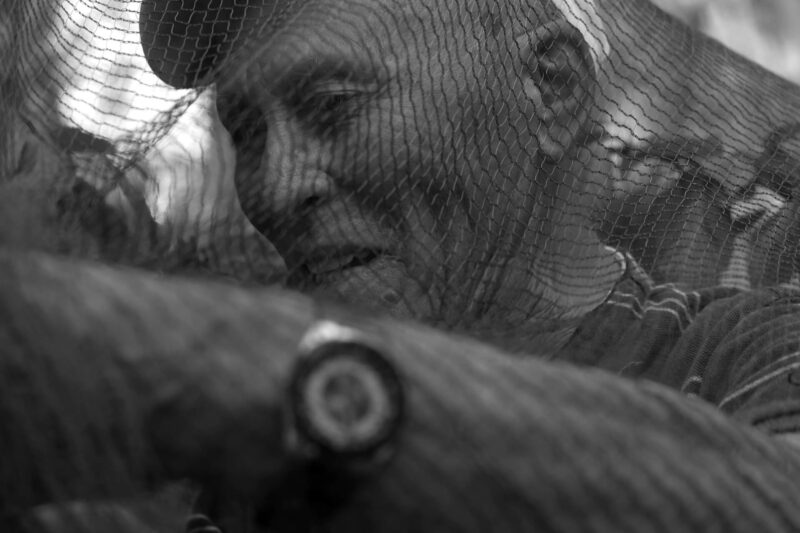
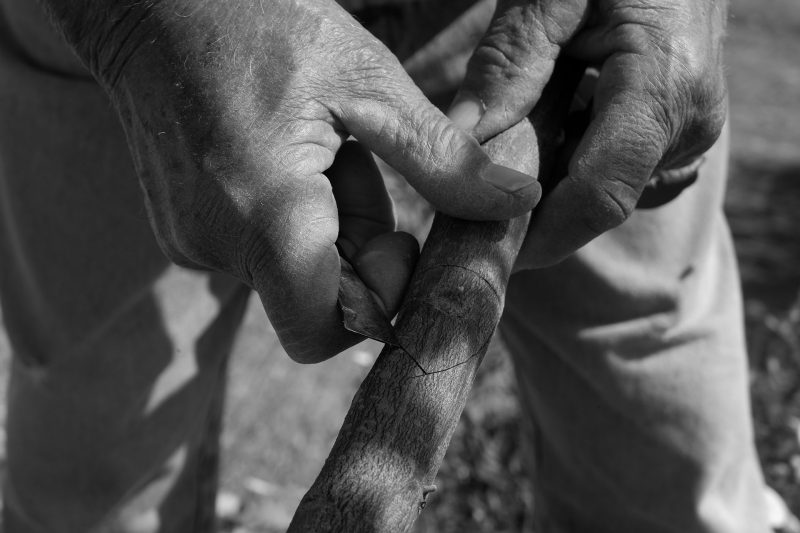
Over time, our agricultural activity has followed a path of gradual specialization, aimed at establishing a clear and recognizable production identity. The decision to focus on single-variety extra virgin olive oils stems from a desire to highlight the unique qualities of each cultivar, carefully interpreting their sensory profiles in relation to the specific pedoclimatic conditions of each plot.
This approach has led to increasingly precise management of the groves, with tailored interventions for each variety, taking into account exposure and soil characteristics, to ensure that every harvest faithfully reflects the connection between plant and land.
A significant milestone in this journey came in the early 1980s with the acquisition of a second estate in Contrada Cucco. Defined by terraces, limestone soils, and the seasonal influence of a tributary of the Tellaro River, it forms a highly biodiverse ecosystem. The presence of numerous native tree and fruit species, together with spontaneous flora and microclimatic variations, creates a complex agricultural environment, imparting to the produce unique organoleptic qualities that are deeply tied to the land.
At the heart of this project lies a simple principle: to continue an agricultural model built on self-sufficiency, sustainability, and responsibility toward the land. Rooted in past commitment, this approach today expresses a clear intention—to preserve and pass on the agricultural, environmental, and cultural heritage that has been carefully cultivated over generations.